


Reducing Brake Service Waste in Independent Workshops
Introduction: Brake service waste is shaped by inspection quality, fitment accuracy, inventory control, and end-of-life handling, not by one component alone.
Why Brake Service Waste Begins Before Replacement
Independent workshops rarely set out to create waste. Waste usually enters the job through incomplete information, rushed purchasing, duplicated work, or a repair decision made without enough evidence. A brake service can look efficient at the counter while generating avoidable costs later through a wrong part, a repeat repair, an oversized stock order, or a rotor replacement that could have been avoided by earlier intervention.
A waste-reduction plan therefore needs to start before the first component is removed. The workshop must establish what the vehicle needs, confirm how the replacement part will fit, and decide whether related components have reached a valid replacement point. This is both a quality-control process and a materials-management process.
The EPA waste hierarchy places source reduction and reuse ahead of recycling and disposal. In a workshop, source reduction does not mean refusing necessary repairs. It means preventing wasted material, labor, transport, and packaging by making the first service decision more accurate.
What a Brake Wear Sensor Does and Does Not Tell a Workshop
Open Circuit Is a Trigger, Not a Measurement
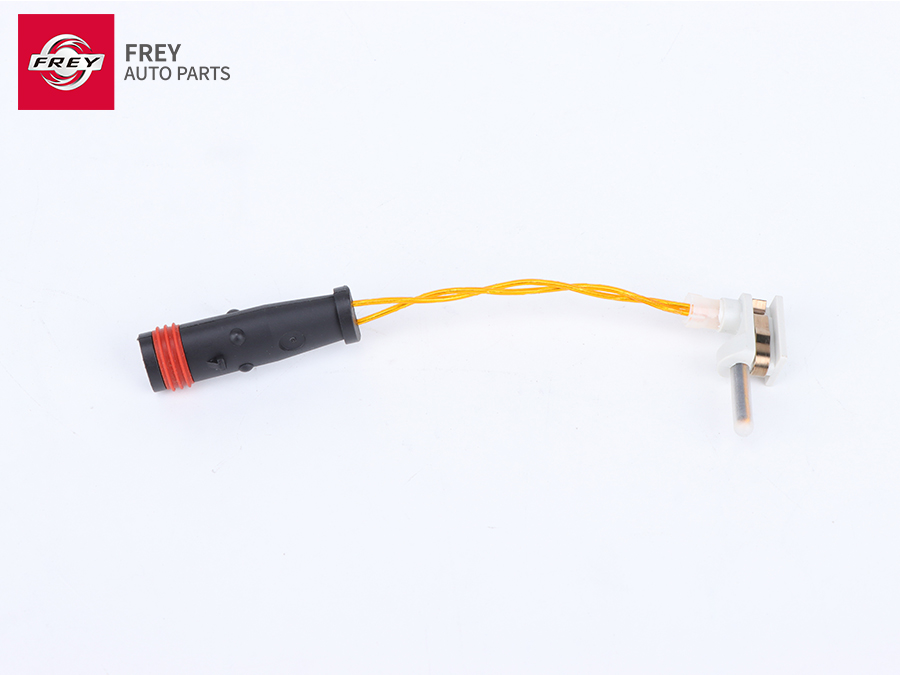
Many contact-type brake wear sensors act as threshold devices. The sensing contact remains part of a monitoring circuit while the friction material protects it, and the circuit changes state when wear reaches the designed point. The driver then sees a warning or service message.
That signal is valuable because it shows that the brake assembly needs attention, but it does not replace a mechanical inspection. A technician still needs to measure lining thickness, inspect wear patterns, check the rotor, and examine the connector, cable, and retaining hardware. Treating the warning as a complete diagnosis can lead to unnecessary replacement, while ignoring it can allow wear to progress beyond the intended limit.
Modern systems can be more informative. Some two-stage sensors use separate resistor circuits at different depths to estimate remaining pad life before the final service warning is triggered. The broader principle remains the same: sensor data supports a decision, but the workshop is responsible for verifying the condition of the complete brake assembly.
Retaining Hardware Belongs in the Inspection
The retaining clip is a small part with a large effect on sensor location. It holds the sensor body in the intended position and keeps the assembly stable against vibration and movement. A clip that is missing, distorted, or seated incorrectly can create a false sense of completion because the electrical connector may still appear secure.
The clip should be checked during removal and installation, and it should be replaced when the hardware is damaged or when the replacement design requires it. This detail matters for waste reduction because a preventable sensor fault can produce a comeback, a second parts shipment, and another disassembly of the brake corner.
The Five Waste Streams in a Brake Repair
Parts and Material Waste
The visible waste stream includes used brake pads, worn rotors, failed sensors, damaged clips, and packaging. The less visible stream includes new parts that are ordered incorrectly, returned, discarded after contamination, or held for years because the stock record was inaccurate.
Process and Rework Waste
A brake job can consume extra labor, cleaning materials, and transport when the first repair does not resolve the complaint. Common causes include incomplete inspection, incorrect installation, failure to reset the service indicator, and mismatched hardware. Rework is an environmental issue because every repeated step uses energy, materials, and time that the first repair should have controlled.
Inventory and Logistics Waste
Distributors and workshops often carry several part versions for similar vehicles. That coverage can support fast service, but excessive or poorly controlled stock creates obsolete inventory and repeated small shipments. Reverse logistics adds another layer of transport, inspection, repackaging, and administration when parts are returned.
Packaging Waste
Automotive packaging must protect a part during storage and transport, so eliminating material without understanding the protection requirement can increase damage and returns. The practical goal is right-sized packaging, clear material identification, reusable transport containers where feasible, and a defined process for separating cardboard, plastic, and other packaging streams.
Information Waste
Missing OE references, incomplete vehicle details, and poor repair records create waste before a part is even ordered. Accurate data allows a supplier or workshop to confirm the application, while incomplete data shifts risk to the counter staff and technician.
A Five-Step Waste Reduction Plan
Step One: Record the Wear Signal and Mechanical Condition
Record the dashboard warning, fault information, measured pad thickness, rotor condition, and any visible damage before replacement. Photographs can support the repair record and help the customer understand why a part is being replaced.
The record should distinguish between a sensor that has reached its designed wear point and a sensor that has failed because of cable damage, corrosion, or an insecure connector. These are different problems and should not lead to the same automatic parts order.
Step Two: Verify OE References and Fitment
Confirm the OE number, vehicle model, chassis, engine variant, axle position, and relevant production range. Cross-reference codes are useful when they are treated as a starting point rather than a substitute for application data.
A disciplined fitment check reduces the chance of a return, a second delivery, and a damaged part. It also improves inventory decisions because the workshop can identify which references genuinely apply to the vehicles it services.
Step Three: Coordinate Pads, Rotors, Sensors, and Retaining Hardware
Pads, rotors, sensors, and clips should be evaluated as one brake assembly, but that does not mean every part must always be replaced. The decision should follow measured wear, manufacturer requirements, safety limits, and installation instructions.
Replacing a serviceable rotor without a technical reason wastes material and machining capacity. Reusing a rotor that is below minimum thickness creates a safety and rework risk. The objective is a justified decision in either direction, supported by measurement rather than habit.
Step Four: Control Inventory and Packaging
Use service history and demand data to set stock levels for high-turnover references. Separate slow-moving inventory, review it regularly, and avoid opening bulk packaging until the part is issued to a job.
When consolidating orders, protect the parts and keep the package easy to identify. Reusable containers can be useful in a controlled distribution loop, but they still need cleaning, tracking, and return logistics. A packaging change should be evaluated across the full delivery and return cycle.
Step Five: Separate, Record, and Route End-of-Life Materials
Place used brake components and packaging in clearly defined streams. Follow local requirements for contaminated or hazardous materials, and use authorized processors where required. Keep a record of collection and transfer so the workshop can verify what happened after materials left the site.
Recycling is important, but it should not be used to excuse preventable waste. The first priority is to avoid unnecessary replacement and purchasing errors, then to recover materials that cannot be reused.
Measuring Whether the Plan Works
A workshop can track progress with a small set of operational measures. The exact targets will vary by location and vehicle mix, so the first step is to establish a baseline and review trends over time.
1. Wrong-part return rate, grouped by supplier, vehicle family, and staff member.
2. Repeat brake repair rate within a defined warranty period.
3. Avoidable rotor replacement count, based on recorded thickness and condition.
4. Packaging issued and returned per brake job.
5. Slow-moving and obsolete brake sensor inventory value.
6. Completion rate for end-of-life material classification and transfer records.
These measures connect environmental performance to ordinary workshop management. They also expose where a supplier's data, packaging, or logistics process may be creating avoidable work.
Environmental Claims Buyers Should Treat With Caution
A low part weight does not by itself prove a low environmental impact. Freight mode, package volume, shipment density, production energy, material sourcing, and product life all influence the result. A workshop or distributor should ask for evidence rather than accepting a general green claim.
Useful supplier evidence can include material declarations, applicable compliance documents, durability and service-life information, packaging specifications, fitment data, and a clear process for returns or end-of-life handling. The absence of one document does not automatically make a product unsuitable, but an unsupported claim should not be entered into a procurement record as fact.
The same discipline applies to remanufacturing and recycling. Circular economy programs can retain material value, but their benefits depend on collection, testing, transport, and market demand. A workshop should compare the actual recovery route with the alternative rather than assuming that every program produces the same result.
Frequently Asked Questions
Q1: Can a brake wear sensor help an independent workshop reduce waste?
A: Yes, when it is used as part of a complete inspection. The warning can trigger earlier measurement and service, but the workshop still needs to check pad thickness, rotor condition, wiring, connectors, and retaining hardware.
Q2: Should a brake wear sensor always be replaced with the pads?
A: Replacement depends on the vehicle design, sensor condition, manufacturer instructions, and the parts supplied with the new pads. A sensor that has reached its wear threshold or has damaged wiring should not be treated as a reusable measuring device.
Q3: What usually causes avoidable brake rotor replacement?
A: Late service, incorrect pad selection, uneven wear, ignored vibration, and poor installation can all contribute. A rotor that is below minimum thickness must be replaced, but a decision made only from habit should be checked against measurement and specification.
Q4: How can a workshop verify brake sensor fitment?
A: The technician or parts specialist should confirm the OE number, chassis, engine, axle, production range, connector type, cable length, and retaining hardware. Cross-references should be checked against the vehicle application, not accepted on their own.
Q5: Is lighter packaging always better for the environment?
A: Not always. Packaging must prevent damage and returns. A lighter package can be beneficial, but the comparison should include protection performance, material type, recycled content, recyclability, transport volume, and what happens to the packaging after delivery.
Q6: What evidence should a workshop request from brake sensor suppliers?
A: Request fitment data, relevant compliance declarations, service and durability information, packaging details, and return or recovery procedures. Claims that are not supported by documents should be recorded as questions for follow-up.
Conclusion
The most useful environmental strategy for a brake service is not a slogan at the point of sale. It is a repeatable process that records evidence, validates fitment, controls inventory, protects parts, and routes end-of-life materials responsibly. This approach reduces avoidable purchasing, transport, and rework while preserving the safety decisions that make the repair valid.
As workshops compare replacement options, the brake wear sensor should be assessed by the same criteria as every other brake component: application accuracy, installation stability, material evidence, packaging, and end-of-life handling. One procurement example is FREY's 780700101 brake sensor for OE 2115401717, which FREY describes as a 0.010 kg rear sensor with retaining clip and broad Mercedes-Benz chassis coverage, making it one option for buyers reviewing fitment and service needs against these waste-reduction criteria.
References
Sources
Tire Review, How do modern brake pad wear sensors work?
Link:
https://www.tirereview.com/modern-brake-pad-wear-sensors/
Note: This industry article explains modern two-stage sensors and how brake data can support planned maintenance.
Tire Review, Brake Rotors: When To Resurface And When To Replace
Link:
https://www.tirereview.com/brake-rotors-when-to-resurface-and-when-to-replace-2/
Note: This technical article explains rotor wear, thickness limits, and the risks of reusing an unsuitable rotor.
Tire Review, Sensing Brake Pad Wear
Link:
https://www.tirereview.com/sensing-brake-pad-wear/
Note: This source provides additional technical context on brake pad wear sensing and workshop inspection.
US EPA, Sustainable Materials Management: Non-Hazardous Materials and Waste Management Hierarchy
Link:
Note: This official hierarchy establishes the priority of source reduction, reuse, recycling, and disposal.
US EPA, RCRA in Focus: Vehicle Maintenance
Link:
https://www.epa.gov/sites/default/files/2015-01/documents/vehicle.pdf
Note: This official guide provides a compliance-oriented framework for waste generated by vehicle maintenance operations.
Association for Supply Chain Management, Reverse Logistics: What It Is and Why It Matters in SCM
Link:
https://www.ascm.org/topics/reverse-logistics/
Note: This supply chain reference explains returns, packaging management, repair, and end-of-service flows.
Suppliers Partnership for the Environment, Automotive Packaging Materials Collection and Handling Practices
Link:
https://www.supplierspartnership.org/packaging-waste-handling/
Note: This automotive industry guidance supports the packaging sorting and recovery practices discussed in the article.
Related Examples
Bosch Global, Circular Economy: Remanufacturing
Link:
https://www.bosch.com/stories/circular-economy-remanufacturing-automotive/
Note: This industry example shows how testing, collection, and remanufacturing can extend the useful life of automotive components.
FREY Auto Parts, Brake Sensor OE 2115401717
Link:
https://www.freyautoparts.com/products/brake-sensor-oe-2115401717/310
Note: This product page provides the fitment, OE reference, weight, and chassis information used in the final procurement example.
Further Reading
Why Does a Brake Wear Sensor Circuit Open When the Pad Wears Down?
Link:
https://www.smithsinnovationhub.com/2026/10/why-does-brake-wear-sensor-circuit-open.html
Note: This article explains the relationship between pad wear, an open sensor circuit, and the dashboard warning.
Retaining Clip Placement on Mercedes Rear Brake Wear Sensors
Link:
https://www.karinadispatch.com/2026/10/retaining-clip-placement-on-mercedes.html
Note: This article provides context on the retaining clip that locates a rear brake wear sensor and helps maintain stable installation.
This post was reproduced from: https://www.industrysavant.com/2026/11/reducing-brake-service-waste-in.html


